
SoftBank-backed Ola Electric took the wraps off its maiden e-scooter offerings -- Ola S1 and S1 Pro -- for a commercial launch on Sunday. With prices starting from Rs 99,999 (excluding state government incentives, registration fee, and insurance cost), the Bhavesh Aggarwal-founded firm said the e-scooters are designed and engineered in India for the world and will deliver the best scooter experience to the consumer. He suggested that after 2025, sale of petrol-powered two-wheelers should not be allowed.

Though academically well qualified, doesn't have enough experience, says the firm.

Amid rising petrol prices, two-wheeler makers such as Mahindra & Mahindra, TVS Motors, Hero MotoCorp and Bajaj Auto are stepping up research to develop engines run on diesel or other fuels.
What has hit sentiment further is a draft proposal by the government to increase vehicle insurance premiums for financial year 2022-23 (FY23). Third-party motor insurance premiums have not been increased over the last two years and if this is approved, insurance costs for specific segments could rise by a fifth. The worst impacted is the 350cc and above two-wheeler segment, where premiums are up 21 per cent. Royal Enfield (Eicher Motor) is the market leader in the segment. The premiums in the 150-350cc two-wheeler category are also being inc

An analysis of past 20 years' demand cycles done by Edelweiss Securities indicates that the auto sector is currently in the middle of a down cycle. Volume recovery, they say, is unlikely to be as sharp as in the past, unless there is strong fiscal support.
The TVS family has been engaged, for more than a century, in a diverse range of businesses through various entities in which the branches of the TVS family have invested in or through T V Sundaram Iyengar & Sons, Sundaram Industries, and Southern Roadways - collectively referred to as the TVS Holding Companies.

Auto sales in April have started showing the impact of lockdowns that has put the brakes on the recovery of the sector, a report said on Tuesday. With more states announcing lockdowns and some more OEMs expecting to go for maintenance shutdowns, as many as 50 per cent of the dealers are likely to be impacted by the move, it added. However, the full-year prospects remain positive if the COVID wave recedes in the April quarter and the vaccination drive goes as planned, brokerage firm Centrum said in the report.

Check out some of the stocks that will react on the basis of their numbers in the near term.

Of the 32 students, 28 self-sponsored students were successfully placed in manufacturing companies like Crompton, McNallyBharat, Cummins, Hewlett-Packard, JSW, VNL (Gurgaon), TVS Motor, PricewaterhouseCoopers, Ashok Leyland, Vedanta and Adani Power, among others.

Plan is to sell flats, of sizes 385-500 sq ft, at prices ranging from Rs. 7 lakh to Rs. 10 lakh.

Infosys chief mentor N R Narayana Murty's son Rohan Murthy, a qualified engineer, also seems to know the craft of jewellery making, as he spent seven-and-a-half hours to make a platinum ring for fiance Lakshmi Venu.

Passenger vehicle wholesales in India increased by 12.73 per cent to 285,367 units in November as against 253,139 units in the same month last year riding on the back of festive demand, auto industry body SIAM said on Friday. According to the latest data by the Society of Indian Automobile Manufacturers (SIAM), two-wheeler sales rose 13.43 per cent to 16,00,379 units, compared with 14,10,939 units in the same month last year.
Rohan Murthy, the only son of his parents, has found his life partner in Lakshmi Venu, the 26-year-old daughter of TVS Motor co-chairman Venu Srinivasan. In no time after confirmation from the bride and the groom, the two families sealed the merger of souls with their engagement in Chennai on Friday evening.
The Supreme Court on Monday allowed Chennai-based two-wheeler company TVS Motor Company Ltd to manufacture TVS Flame, a 125-cc bike sporting twin-spark plugs, the technology for which Bajaj Auto allegedly holds the patent rights.
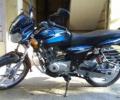
After many attempts, Bajaj finally has a bike to counter Hero Honda in the 100cc segment.
Led by market leader Hero Honda, two-wheeler manufacturers posted an impressive growth in sales during the month of November on the back of favourable bank lending rates and a good response to new launches. Heavy promotional campaigns and sales offers by most companies also aided demand.

Lakshmi Venu, granddaughter of T S Srinivasan (TVS) and A Sivasailam (The Amalgamations Group), is managing director of Sundaram Clayton Limited (SCL) and director of TAFE Motors and Tractors Limited (TMTL).

Lakshmi Venu's induction on Sundaram Clayton's board is part of the TVS Group's larger succession plan to make way for the women in the family.

While the country's largest car maker, Maruti Suzuki India, said its car will become costly by two per cent, Hyundai Motor India said it will result in a price rise of Rs 6,500-25,000 on average.
A majority of HMIL's current export comprises the i10 model, which is exported to Asia, Latin America and Western Europe. In addition, the company has stated that 90 per cent of the i20 model (a premium hatchback) will be exported. The company will produce 150,000 units of the model annually.
Home-grown automotive players like Tata Motors, Ashok Leyland, Bajaj Auto, Hero Honda, TVS Motors and Maruti Suzuki are augmenting the use of plastics in engine components in an ambitious effort to reduce dependence on key metals like steel and aluminium, all of which have witnessed stupendous rise of 35-50 per cent in the past 5 months.

Experts attribute the high valuation of Indian auto makers to the faster growth in India compared to the rest of the world.
TVS Motor Company on Monday said it aims 3 to 4 per cent growth in two-wheeler sales during this fiscal, while motorcycle sales were expected to be flat at 700,000 units.
Say lower duties could enhance demand.

Low-base effect to kick in, but higher raw material prices could spoil the show.
In an attempt to steal the two-wheeler market from the three Indian giants Hero Honda, Bajaj and TVS Motors, which collectively account for almost 85 per cent of sales, Japanese bike manufacturers like Yamaha, Honda, Suzuki and Kawasaki will launch scaled-down Indian versions of their international superbike models.
Car maker Maruti Suzuki India Ltd on Monday reported a 15.75 per cent jump in the total sales in May at 79,872 units as against 69,001 units in the same month last year.
The Madras high court on Saturday restrained TVS Motor Company from manufacturing, marketing and selling its bike 'TVS Flame 125' in the ongoing patent infringement case with rival Bajaj Auto Limited.

Leading carmakers Maruti Suzuki and Hyundai witnessed a double-digit drop in sales in October on account of the global semiconductor shortage impacting production. Kia India, Honda Cars and MG Motor also saw a fall in dispatches last month as compared with October 2020. However, companies like Tata Motors, Mahindra, Nissan and Skoda managed to post positive numbers last month despite the supply chain challenges.

Vehicle sales across categories registered a decline of 8.62 per cent to 20,86,358 units from 22,83,262 units in May 2018.
Even as a court case rages over the alleged intellectual property infringement, Chennai-based TVS Motor on Thursday launched its new 125-cc motorcycle, Flame, which rival Bajaj Auto says is based on its patented twin spark plug technology.
Keen competition will make the going tough even for market leaders in the segment.
The Chennai-based company is developing bikes in the range of 200cc and above to compete with Bajaj Auto's Pulsar range, which begins with the 150cc variant and ends with the 220cc model at the top of the ranks, sources, who declined to be identified, said.
The Pune-based company pointed out that the Chinese manufacturer Taian Chiran Machinery Co and its Sri Lankan distributor were recently instructed by a Sri Lankan court to withdraw their copy of Bajaj Pulsar with DTSi technology from the market.
Bajaj Auto's move to sue TVS comes two days after the Chennai-based company announced plans to roll out its latest 125 cc bike 'Flame' with Controlled Combustion Variable Timing Intelligent (CC-VTi) technology.
Leading carmakers Maruti Suzuki, Hyundai and Tata Motors reported robust dispatches to dealers in May on the back of strong demand for passenger vehicles across regions, even as the global semiconductor shortage continued to impact production. Mahindra & Mahindra, Kia India, Toyota Kirloskar Motor, Honda Cars and Skoda also witnessed strong demand for their models last month. The month of May also witnessed Tata Motors race ahead of Hyundai in terms of domestic wholesales.
TVS Motor Company launched its first electric scooter, Scooty Teenz Electric, in Bangalore on Wednesday. Run on the Valve-Regulated-Lead-Acid (VRLA) battery, the vehicle is powered by a 800 watt motor and can carry up to 130 kg of load. It can deliver an average range of 40 km per nine hours of battery charge. The maximum speed the vehicle can clock is 40 kmph. It is targetted at is teenage girls who use vehicles to travel short distances ranging between 15 and 25 km per day.
